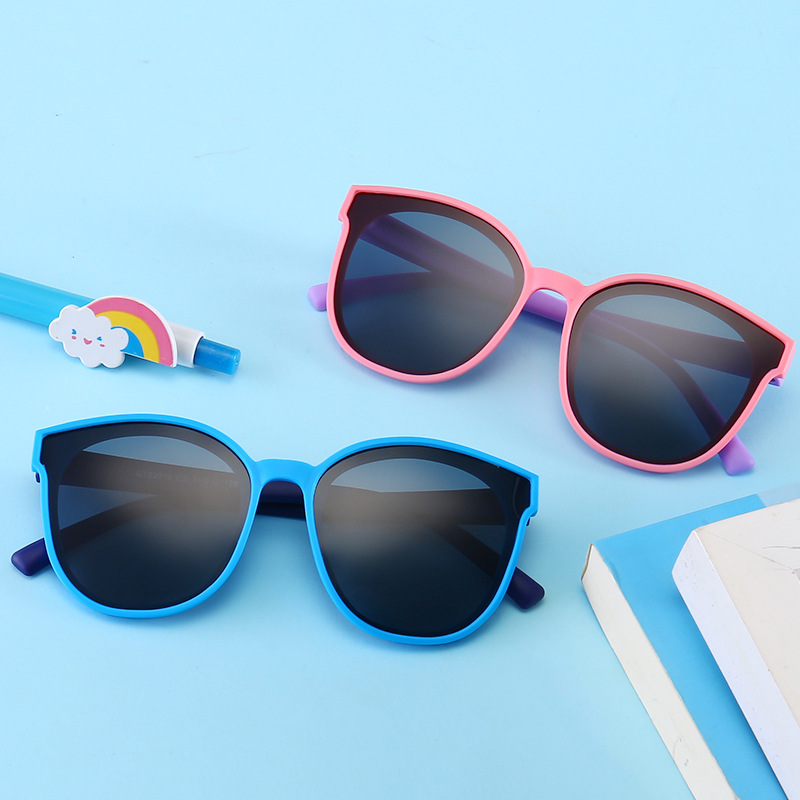
Lens selection is one of the more commercially sensitive decisions in kids sunglasses buying because it affects three things at once: how the product looks at retail, what price the market will support, and what documentation or confirmation buyers may need to provide to their accounts. Getting lens direction wrong — or leaving it unconfirmed until late in the process — can create margin pressure, retail feedback problems, or misaligned expectations at the sample stage.
This article does not cover every possible lens configuration. It focuses on the practical decisions most B2B buyers face when planning a kids sunglasses line from a China-based manufacturer.
1. Standard Tinted Lenses: The Foundation of Most Kids Sunglasses Programs
Standard tinted lenses are the most common choice in commercial kids sunglasses programs. They are cost-effective, available in a wide range of colors, and well suited to most retail channels — from specialty gift stores to online assortments to seasonal display programs. For buyers building a volume-oriented program, tinted lenses typically provide the best combination of appearance, cost, and supplier availability.
Common tint colors for kids sunglasses include grey, brown, green, blue, pink, yellow, purple, and red-orange. Each positions differently at retail. Grey and brown lenses read as more neutral and practical, which works better in outdoor activity or daily-use programs. Blue, pink, purple, and mirrored finishes tend to support fashion-forward children's programs, novelty assortments, and seasonal gifting buys.
When selecting lens color, buyers should consider whether the color direction is consistent with the frame style, the target age group, and the shelf context the buyer is working with. A pink lens in a toddler frame reads differently from a pink lens in a style targeted at school-age children. These distinctions matter when building an assortment across age groups.
2. Mirror and Flash Coatings: Visual Impact With Added Cost
Mirror and flash coatings are applied to the front surface of the lens and create a reflective or metallic appearance. They are popular in fashion-forward kids sunglasses because they add visual impact at a relatively low incremental cost compared to polarized lenses. In retail, mirrored lenses photograph well and display strongly, which makes them useful for buyers building display-focused programs.
The trade-off with mirror coatings is durability. Depending on the coating method and the quality of the base lens, mirror finishes can be more susceptible to surface scratches or peeling than plain tinted lenses. Buyers should review mirror coating quality during sample inspection, particularly at lens edges and across the full lens surface, before approving for bulk production. If the sample set shows inconsistent coating adhesion, this should be flagged before bulk confirmation.
3. Polarized Lenses: When to Consider Them and When Not To
Polarized lenses reduce glare by filtering horizontally polarized light reflected from flat surfaces such as water, sand, or wet roads. For adults, polarized lenses are common in outdoor performance and premium lifestyle eyewear. For kids sunglasses in a B2B context, polarized is a more nuanced addition that depends on where the product is being sold and what the buyer's retail account expects.
Polarized lenses carry a higher unit cost than standard tinted lenses, and that cost difference must be reflected in either retail price or margin. Buyers considering polarized should confirm whether their retail channel — or their end customer — will recognize and pay for the distinction. In some market segments, the premium is easy to justify. In others, polarized adds cost without a proportional increase in perceived value at the point of sale.
Buyers should also note that polarized verification requires a simple test at sample stage: the lens should visually dim or darken when rotated against another known polarized lens at 90 degrees. Confirming this during sample review prevents the polarized claim from going unchecked before bulk production.
4. Lens Appearance and Retail Channel Alignment
The lens decision should connect to how the product will be sold. Different retail channels carry different visual expectations. A display-focused gift program with seasonal sunglasses may prioritize colorful, eye-catching lenses that photograph well and stand out in a rack display. A specialty outdoor retail program may favor more neutral lenses with a stronger functional association. A private label kids brand may need consistent lens color across SKUs to maintain visual coherence on the brand's packaging and catalog imagery.
Buyers who define channel context before discussing lens options with suppliers will get more relevant product suggestions and be better positioned to review samples critically. Without channel context, lens selection becomes a visual preference exercise rather than a commercial decision — and visual preferences can shift during internal review in ways that make sample approval slower and less consistent.
5. Sample Review Points for Lens Confirmation
Regardless of which lens type is selected, sample review should include specific lens checks before bulk production is approved. Buyers should confirm:
- Lens color consistency across sample units (no visible batch variation)
- Surface clarity with no visible scratches, bubbles, or coating irregularities
- Mirror or flash coating evenness and edge adhesion (where applicable)
- Polarized verification using a cross-polarization test (where applicable)
- Lens fit within the frame with no visible gaps, warping, or edge protrusion
- Whether the lens appearance matches the color reference agreed during the quotation
Keeping a written record of lens confirmation at sample stage — including photographs and notes on what was reviewed — makes pre-shipment inspection more efficient and reduces the likelihood of lens-related disputes on bulk delivery.
6. Cost and Communication Points to Discuss With Your Supplier
Lens selection affects unit cost in ways buyers should understand before finalizing a quotation. Standard tinted lenses are typically the most cost-efficient option. Mirror coatings add a moderate incremental cost depending on coating type and quantity. Polarized lenses carry a higher material cost that should be reflected in the quotation.
When discussing lens options with a supplier, useful questions include:
- What lens colors are available in the styles you are considering, and are there any MOQ differences by color?
- Is mirror coating applied as a standard process or a custom addition, and how does it affect lead time?
- If polarized lenses are requested, what is the cost difference and how is the polarized specification confirmed?
- Can lens samples be provided for review before committing to a color or lens type?
Asking these questions early in the supplier conversation allows the quotation to reflect the actual program rather than a default configuration that may not match the buyer's needs.
Ready to review lens options for a kids sunglasses program?
If you are planning a kids sunglasses program and want to discuss lens color, polarized options, and how to structure a sample review, contact us to start the conversation before the formal inquiry stage.