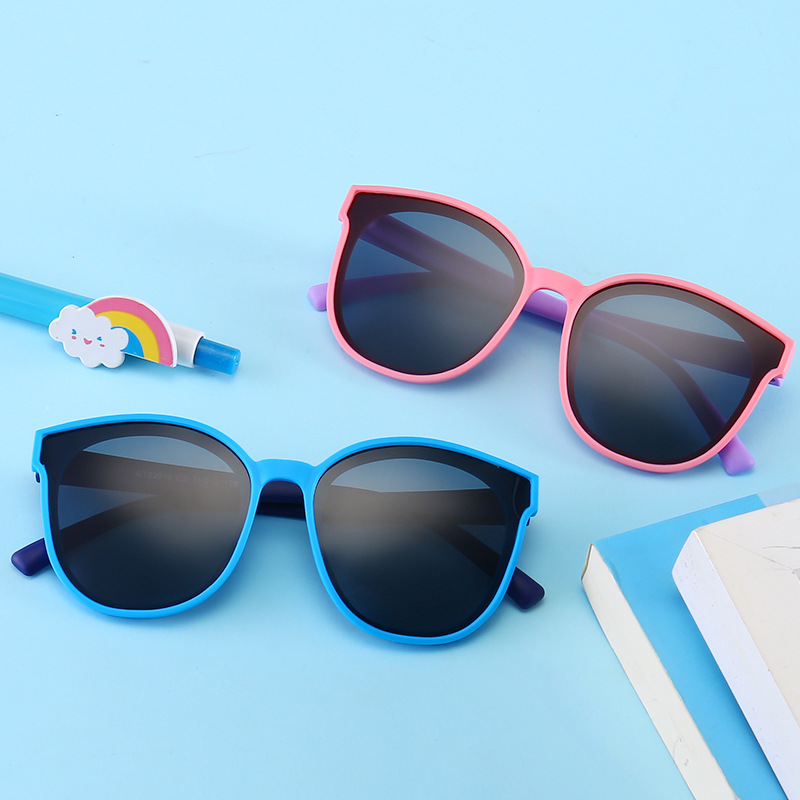
For buyers importing kids eyewear, compliance is not a single checkbox. The requirements depend on where the product will be sold, whether it is classified as sunglasses, an optical frame, or in some cases a toy, and what claims appear on the packaging. Two suppliers can quote the same style at similar prices, but only one may be able to support the documentation your destination market expects. Understanding the landscape early helps you ask the right questions before you commit to an order.
This article is a general overview for procurement planning. It does not replace advice from a qualified compliance consultant or testing laboratory, and it does not guarantee that any specific product meets any specific regulation. Requirements change over time and vary by country, so buyers importing into a regulated market should confirm the current rules for that market directly.
1. Start With the Destination Market, Not the Product
The single most useful habit is to define the destination market before discussing test reports. A pair of kids sunglasses sold in the European Union follows a different framework than the same product sold in the United States, and both differ from requirements in other regions. If you sell across several markets, your program may need to satisfy more than one set of rules at once.
Because of this, the first thing to confirm internally is where the goods will clear customs and be retailed. That answer determines which standards below are relevant, which marks belong on the product and packaging, and which test documentation you should be asking your supplier to support. Skipping this step is one of the most common reasons buyers receive documentation that does not match what their market actually needs.
2. The European Union: CE Marking and PPE Classification
In the European Union, sunglasses are generally treated as personal protective equipment (PPE) against sunlight, which means CE marking is typically involved. Sunglasses are commonly tested against the EN ISO 12312-1 standard, which covers sunglasses and related eyewear for general use, including aspects such as UV filtering and light-transmission categories. The frame side is often assessed under EN ISO 12870, which covers optical frame requirements.
For buyers, the practical points are that the CE mark is a manufacturer declaration backed by testing and technical documentation, and that a UKCA mark may be relevant for the United Kingdom as a separate territory. You should confirm whether the supplier can provide a test report referencing the relevant EN ISO standard, whether a Declaration of Conformity can be issued, and whether the technical file exists to support the mark. A CE logo printed on a temple arm is not, by itself, proof that testing was done — the supporting documentation is what matters.
3. The United States: ANSI, FDA, and Impact Considerations
In the United States, the framework is different. Sunglasses are regulated as medical devices in the sense that they fall under the FDA's scope, and the widely referenced consumer standard is ANSI Z80.3 for non-prescription sunglasses and fashion eyewear. Impact resistance is a recurring topic for eyewear sold in the US market, and buyers often ask suppliers about drop-ball style impact testing as part of their due diligence.
The important nuance for kids products is that a children's item can attract additional attention under US children's product rules, which can involve third-party testing and tracking-label expectations depending on how the item is classified and marketed. Because the classification of a given style can be a judgment call, buyers targeting the US market should confirm with the supplier and, where needed, with a testing laboratory how the product should be treated before committing to volume.
4. When Kids Eyewear Is Treated as a Toy
One area that surprises buyers is that some novelty or costume-style kids eyewear can be classified closer to a toy than to functional sunglasses, depending on how it is designed, marketed, and sold. In the European Union that can bring the toy safety framework into scope, and in the United States it can bring children's product and toy-related requirements into scope. Classification affects which tests apply, including mechanical and small-parts considerations relevant to younger children.
The takeaway is not that novelty eyewear is a problem, but that its classification should be settled deliberately rather than assumed. If your program includes fashion-forward or costume styles for young children, raise the classification question with the supplier early so the correct requirements are planned into sampling and testing rather than discovered after production.
5. Documentation Buyers Should Request
Regardless of market, the documentation conversation is where compliance becomes practical. Rather than asking a broad question like "is this certified," buyers get clearer answers by requesting specific items and seeing how the supplier responds:
- A test report referencing the standard that applies to your destination market
- The name of the laboratory that performed the testing, and the test date
- A Declaration of Conformity or equivalent statement where applicable
- Confirmation of which marks belong on the product, packaging, and any user information
- Clarity on whether UV or impact claims are supported by the report or are catalog language
How a supplier handles this request is informative in itself. A capable partner can explain what they can and cannot support, distinguish between what is already tested and what would require a fresh test for your specific configuration, and avoid overstating coverage. Vague or overconfident answers are a signal to slow down and verify.
6. Keeping Your Own Packaging Claims Accurate
For private label buyers, compliance also touches your own artwork. Marks and claims printed on packaging — UV statements, category numbers, standard references, or protection language — should match what the documentation actually supports. Printing a mark or a "100%" style claim that is not backed by a corresponding report creates compliance risk that sits with the party placing the product on the market, which is often the importer rather than the factory.
A safe workflow is to confirm the documentation first, align packaging copy and marks to what is supported, and then lock artwork before mass production. This keeps the printed claims defensible and avoids expensive reprints or relabeling if a claim cannot be substantiated later.
Sourcing kids eyewear for a regulated market?
If you need to align a kids sunglasses or optical frame program with your destination market's documentation expectations, contact us to discuss which standards apply and what we can support before sampling and quotation.