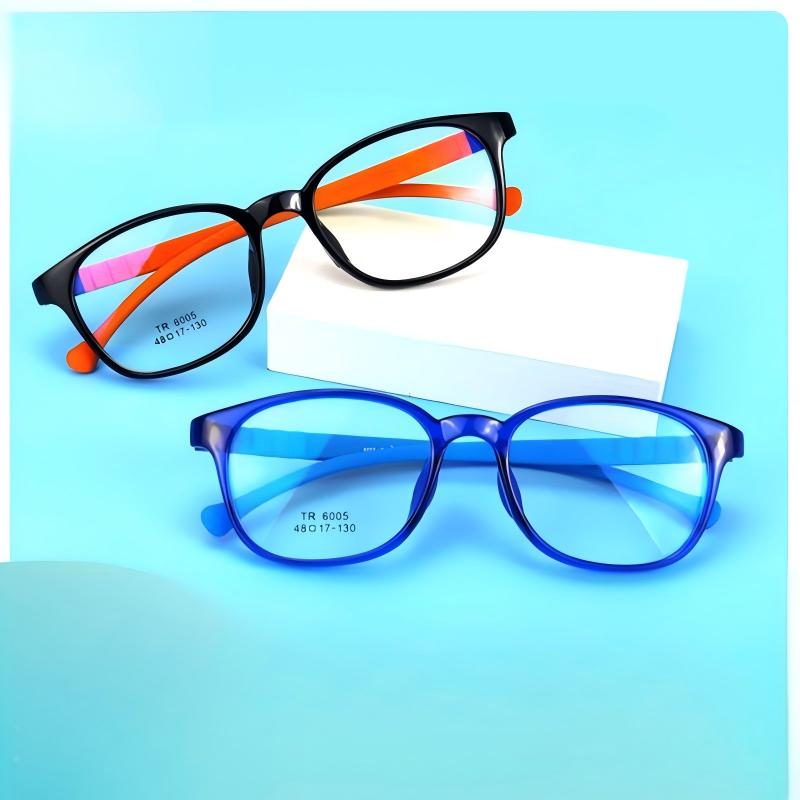
Blue light lenses are now a standard talking point in kids optical eyewear inquiries. Parents ask retailers about screen protection, retailers ask brands, and brands ask suppliers — so the request often arrives at the factory with very little technical detail behind it. For buyers, the useful starting point is understanding what the feature actually is, how it is produced, and how it relates to the commercial and documentation decisions they are making.
This guide does not make specific health or medical claims about blue light. It does help buyers build a cleaner conversation with suppliers around filter type, sample review, and documentation — the practical points that affect procurement and how a product can be described to the end market.
1. What "Blue Light Lens" Means in a Commercial Context
A blue light lens is an optical lens designed to reduce transmission of part of the high-energy visible light range, usually discussed in the region around 400 to 455 nanometers. For buyers, the most relevant point is that "blue light" is not a single fixed standard the way UV400 is often treated. Different suppliers deliver the feature in different ways and with different levels of measurable filtering, so the specification needs to be defined rather than assumed.
In practice, buyers should not accept "blue light" as a given simply because a supplier lists it in a catalog. A more useful approach is to ask how the filtering is achieved, what percentage of the target range is filtered, and whether any test documentation is available. That does not mean every buyer needs a full report at the sample stage, but it does mean the claim should be traceable to something the supplier can support.
2. Filter Types: Coating vs Material
Blue light filtering is generally delivered in one of two ways, and the difference matters for both appearance and cost:
- Surface coating: A blue-light reflective coating is applied to a clear lens. These lenses often show a faint blue, purple, or green reflection on the surface. They keep the lens looking nearly clear, which retail channels tend to prefer, but the filtering level depends on the coating quality and consistency.
- Material / substrate tint: A filtering agent is added into the lens material, which usually gives a light yellow or amber base tint. This approach can filter a higher portion of the target range, but the visible tint changes how the product looks on shelf and in photos.
Neither approach is automatically "better" — the right choice depends on the buyer's channel, price tier, and how the product will be marketed. Buyers planning a clear-lens fashion look should expect a coating-based lens, while buyers who want a stronger measurable filter may accept a light tint. This should be decided before samples, not discovered during review.
3. Documentation and Market Claims
For buyers importing into regulated or claim-sensitive markets, how blue light protection is documented is part of standard due diligence. Buyers should ask whether the supplier can provide a test report showing the filtering percentage across the stated wavelength range, and which testing method or lab produced it.
Just as important, buyers developing private label eyewear are responsible for their own packaging and marketing copy. Claims about eye health, sleep, or screen fatigue carry compliance risk in many markets and should not be used unless the buyer has confirmed them through their own due diligence. A safer approach is to describe the product in terms of what the documentation supports — for example, the measured filtering range — rather than health outcomes the supplier cannot substantiate.
4. What to Confirm Through Sample Review
Sample review is the most practical opportunity for buyers to evaluate blue light lens claims and lens quality before committing to a bulk order. During sample review, buyers should check at minimum:
- Whether the lens is coating-based or tint-based, and whether that matches the agreed specification
- Whether the base tint (if any) is consistent across the sample set and acceptable for the target channel
- Whether the coating reflection is even, without patches, streaks, or adhesion issues
- Whether the lens surface is free of visible bubbles, scratches, or distortion
- Whether a filtering test report was provided or can be requested
If the sample does not match the agreed specification in any of these areas, the buyer should request revision before approving bulk production. Flagging lens issues at the sample stage is far more cost-effective than identifying them during a pre-shipment inspection.
5. Combining Blue Light With Other Lens Requirements
Kids optical programs rarely ask for a single feature in isolation. Blue light filtering is often requested alongside anti-reflective coating, scratch-resistant hard coating, or specific lens index and thickness. Buyers should confirm the full lens stack in one specification so the supplier quotes and samples the correct combination.
It is also worth separating blue light (an optical, indoor/screen-oriented feature) from UV protection (relevant across both optical and sunglasses programs). A clear kids optical lens can carry both a blue light filter and UV protection, but they are different claims backed by different documentation. Keeping them distinct in the specification prevents the common misunderstanding where a supplier confirms "yes" to a combined request that was never precisely defined.
6. Communicating Blue Light Expectations to Your Supplier
Clear communication reduces misunderstanding during lens specification. Buyers who simply say "blue light" often receive a standard coating confirmation that may or may not match their documentation needs. A better approach is to state the expectation precisely:
- Do you want a coating-based clear lens, or do you accept a light tint for stronger filtering?
- What filtering percentage and wavelength range does your market or retail account expect?
- Do you need a test report at sample stage or before bulk shipment?
- Which other lens features (AR coating, hard coating, index) should be combined in the same lens?
Raising these points in the initial inquiry lets the supplier understand the scope rather than treating blue light as a simple catalog checkbox. It also gives buyers a clearer basis for comparing how different suppliers respond to the same requirement.
Planning a kids optical program with blue light lenses?
If you are sourcing kids optical frames and need to discuss blue light filter type, lens documentation, or a combined lens specification, contact us to start a focused conversation about your program before sample and quotation review.